


The 4 most important gear machining processes
Gear machining is a machining art practiced by dedicated and knowledgeable professionals. It takes years of practice and modern machinery for the average equipment manufacturer to produce perfect results. This is why businesses choose professional equipment manufacturers that have proven, high-quality products. Gear makers are truly the unsung heroes in countless industries, quietly working behind the scenes to keep the machines running smoothly. Whether to transmit power or control motion, machines cannot function without strong and reliable gears. But have you ever wondered how these mechanical marvels are created? Read the article below if you want to learn about gear manufacturing methods. In this article, we briefly discuss the 4 most important gear machining processes.
1. Cut gears
It must be affirmed that the gear machining process is very complicated. A variety of gear manufacturing methods are used to convert metal discs or blanks into complex gears with perfect teeth. Any deviation in this process can lead to disastrous consequences. Gear cutting is a fundamental process in gear manufacturing, playing an important role in the production of high quality gears. Several methods are used to cut gears and each method has its own advantages.
One of the most common methods is gear hobbing. In this method, a specialized tool called a milling cutter is used to cut teeth from the workpiece with extremely high precision. This method allows for the quick and efficient production of gears with excellent precision. One of the biggest advantages of gear hobbing is that it is fast and efficient. The variety of hobbing allows gear manufacturers to produce straight and worm gears.
CNC milling is another popular method, in which a rotating cutter removes material from the workpiece to create the desired tooth shape. It offers versatility and can be used for both small-scale and large-scale production. On the other hand, the broaching method uses a broaching tool to cut the teeth into the workpiece surface gradually.
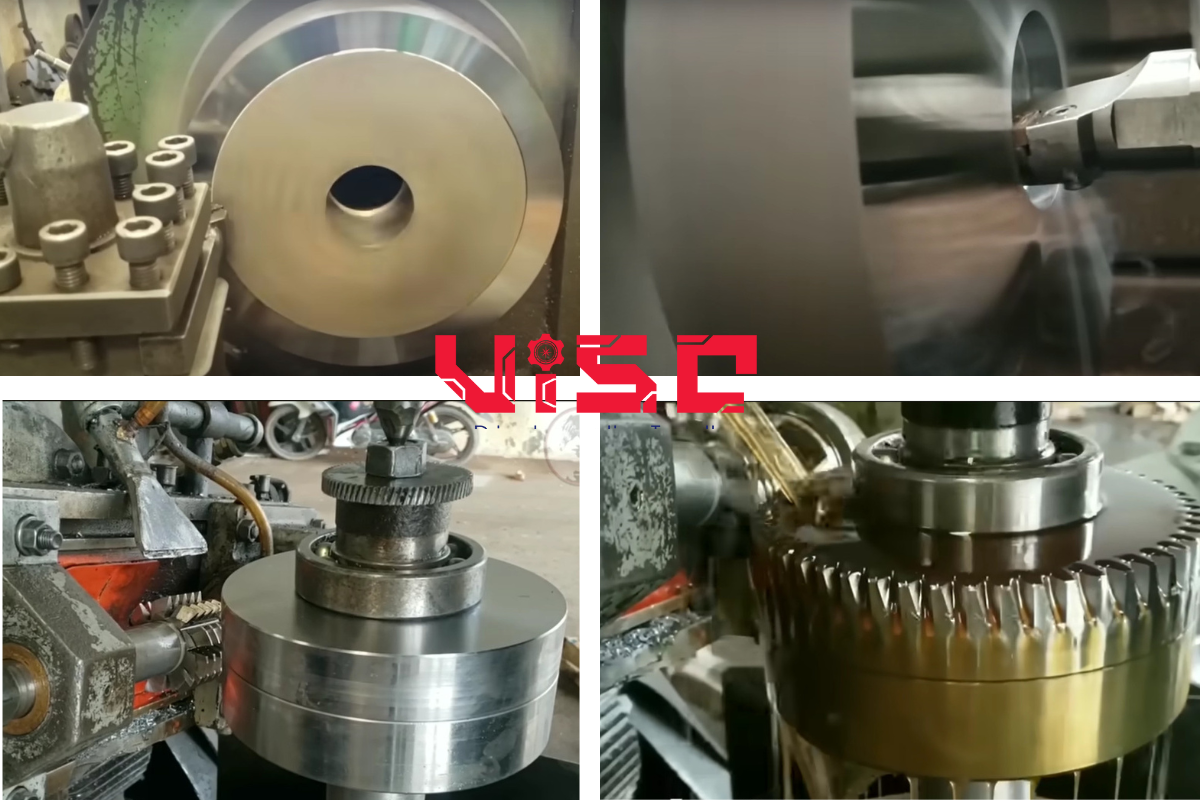
Gear hobbing
2. Gear Shaping
Gear shaping is an important manufacturing process that allows the creation of high quality gears. There are two main methods used in gear shaping: forging and casting.
Forging is a method in which metal is heated and shaped to form gears. This process involves heating the metal to a specific temperature, making it malleable. The metal is then placed into a die or mold and pressed or hammered into shape. Forging offers several advantages, including increased strength and durability as well as improved grain structure. However, it can be more time-consuming and expensive than other methods.
On the other hand, casting involves pouring molten metal into a mold to create gears. This process offers flexibility in terms of design options and can easily achieve complex shapes. Additionally, casting can be more cost-effective for large-scale production. However, it can result in less accurate dimensions and lower material density than forging.
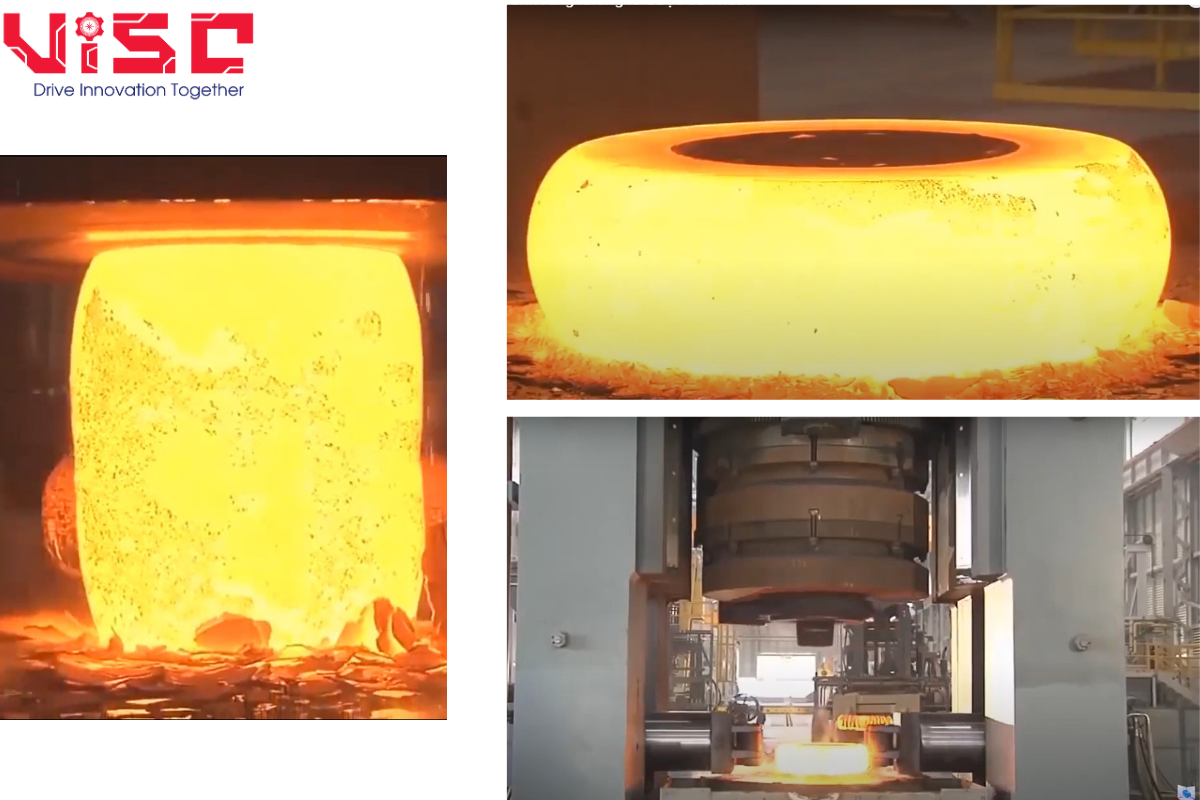
Gear shaping
3. Gear Grinding
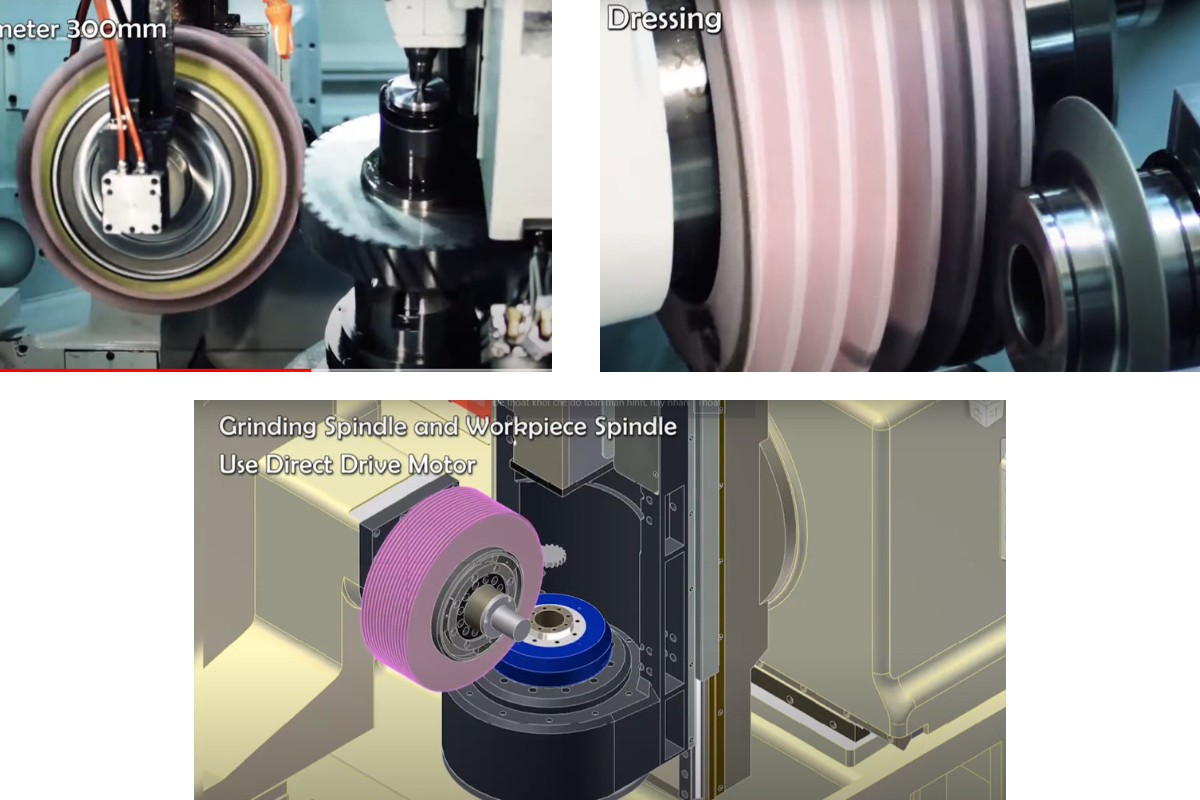
Gear Grinding
Precision is the most important factor when it comes to gear and shaft manufacturing. Gear grinding plays an important role in gear making as it helps in achieving precision and smoothness. This process is essential to remove any imperfections that may have been left behind during the cutting or shaping process. Even the smallest change in gear tooth design can negatively impact torque transmission.
Cylindrical grinding is one of the most popular gear grinding methods. This process involves using a cylindrical grinder to grind the outside diameter of the gear teeth. Another method is internal grinding, where an internal grinder is used to grind the inside diameter of the bore gear.
Profile grinding is another technique used in gear manufacturing. It involves creating complex profiles on the tooth surface using specialized machines and abrasives. This method allows precise control of the shape and size of the gear teeth.
4. Heat treatment
Gears not only need to be precise and compact, they also need to be strong and able to withstand pressure. A gear that breaks at the first sign of pressure is of no use. Heat treatment is important because it helps improve the properties and performance of gears, ensuring their durability and precision. Two common heat treatment processes used for gears are carbonization and quenching.
The carburizing process, as the name suggests, involves introducing carbon into the surface layer of the gear to increase its hardness while maintaining its toughness. This is achieved by heating the gear in a carbon-rich environment, such as a gas or liquid mixture containing carbon compounds.
Quenching is another important step in heat treatment after carburization or any other hardening process. After heating to achieve the appropriate hardness, the gears are cooled quickly by immersing them in a cooling medium such as oil or water. This rapid cooling "freezes" the metal's structure, creating the desired level of hardness throughout the entire part. A gear manufacturing process is not complete without proper heat treatment.
5. Frequently asked questions
Which machining process has the highest precision in gear manufacturing?
CNC milling is the most precise process used in gear manufacturing. It involves using a suitable multi-axis milling machine to fabricate both internal and external teeth with the highest precision. This process is suitable for making all types of devices.
What are the common materials used in gear machining?
The most common material used in gear making is cast iron. It is hard, flexible, ductile and machinable. Other common materials include steel, copper, aluminum and plastic.
See more articles Choosing suitable gear processing materials
Which gear manufacturing method is fastest?
Brushing is the fastest method. It involves using a multi-tooth cutting tool or broach to cut the workpiece into the required shape and size.
Conclusion
The 4 most important gear machining processes include- cutting, shaping, grinding and heat treatment - each contributing to producing gears that meet these standards. Gear cutting allows the teeth on gears to be precisely shaped using methods such as grinding, milling and broaching. Gear forming involves forging or casting metal to create gears with desired properties. Gear grinding ensures precision by removing imperfections left by other processes. And finally, heat treatment enhances the strength and toughness of gears through techniques such as carburizing and quenching.
At VISC we provide a full range of machinery and equipment to serve your gear machining process. If you have already decided on the gear machining method and are trying to choose the right equipment, Please contact us immediately. With a team of dedicated and experienced engineers, we will provide the most accurate advice for your needs.
-------------------------------------------------- ------------------------------
VIETNAM INDUSTRIAL SERVICES AND SOLUTIONS JOINT STOCK COMPANY
Office Address: B4-12 Vinhomes Gardenia, Ham Nghi, Cau Dien, Nam Tu Liem, Hanoi.
Tel: 0243-7525312 Email: Info@machines.com.vn
Website: www.visgroup.vn



 Phone
Phone
+84-243-7525312
 Mail
Mail
info@machines.com.vn
 Office address
B4 - 12, Vinhomes Gardenia, Ham Nghi Street, Cau Dien Ward, Nam Tu Liem District, Hanoi
PRODUCT
Precision mechanical processing machine
Shearing and press brake machine


INFORMATION
REGISTER TO RECEIVE INFORMATION
Sign up to receive information from VISC