


Classification and application of different types of gear
There are many types of gears used in machinery. Each of these gears is designed to transmit motion from one shaft to another. However, the use of these gears in industrial, automotive and commercial applications varies depending on their design. To learn more about the classification and application of different types of gears, follow our article below.
1. Spur gear
One of the most common types of gears is the spur gear. These gears have a cylindrical design and transmit motion between two parallel shafts. They are commonly used in industrial applications because their design makes them easy to install in most machinery. Cylindrical gears can fit even the tightest gearboxes and gear boxes.
Because their design is highly efficient, they are also often custom-made to improve the overall performance of the machine. Cylindrical gears are also less likely to dislodge in equipment, making them a highly durable gear choice. The versatility of these gears makes them useful for many machinery applications.
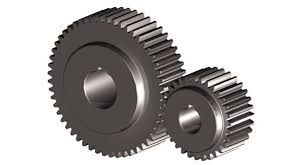
Applications of spur gears
- Transmission
- Conveyor
- Gear pumps
- Bicycle
- Washing machine
2. Helical gear
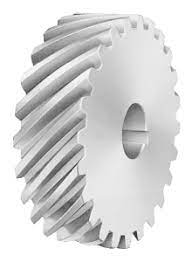
Helical gears have teeth inclined along their gear axis. The teeth of helical gears are longer than most spur gears, allowing them to transmit higher power between shafts more efficiently. Helical gears are also known to reduce vibration and noise as they operate in equipment. The design of these gears makes them an option for working in gearboxes and other industrial equipment.
Applications of helical gears
- Automatic transmission
- Conveyor
- Factory system
3. Bevel gear
There are many different types of bevel gears, including straight bevel gears, spiral bevel gears, hypoid gears, and angular gears. Although they are not all designed the same, they have similar uses.
Bevel gears have a conical surface with the gear teeth cut along their edges. Instead of transmitting motion between shafts, bevel gears transmit perpendicular motion to create higher speeds. Bevel gears are also optimal for managing large loads in machinery.

Applications of bevel gears
- Milling machines and tools
- Garden equipment
- Right angle drive
- Positioning devices
4. Spiral bevel gear
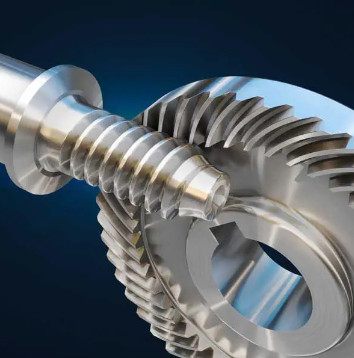
Spiral bevel gears have two helical gears that cross each other with large angles. Spiral bevel gears transmit power between two non-parallel shafts at lower speeds, creating poorly performing motion. Because of the low power and speed of helical gears, they are rarely found in industrial equipment and are instead used for more commercial purposes.
Applications of Spiral bevel gears
- Sewing machine
- Tool
- Low speed device
5. Hypoid gear
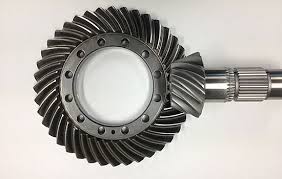
Hypoid gears are another type of spiral bevel gear. However, unlike the spiral bevel gear design, the hypoid gear does not have two intersecting shafts. Instead, their shape is based on a hyperboloid, which is a quadratic surface that is neither conical nor cylindrical but has a center of symmetry, creating a hyperbola-like shape. These gears are used in most gearbox applications.
Applications of Hypoid gears
Car gearbox
6. Angular cutting gear
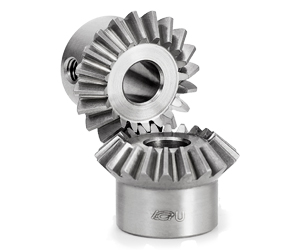
Angular cutting gears are also a type of bevel gear, with a ratio of one. These gears change the direction of transmission. However, they cannot control their speed. Angular cutting gears are designed with both straight and helical teeth depending on their application in the gearbox. However, these gears are most commonly found in automatic transmissions and transmission gear.
Application of angular cutting gears
- Automatic transmission
- Hand drill
- Garage door opener
7. Small rack and pinion gear
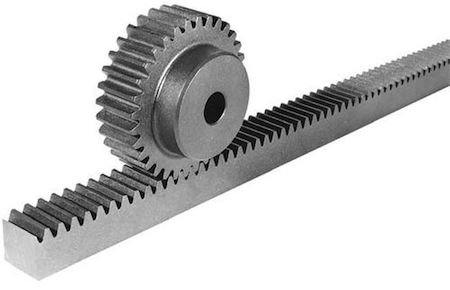
Small rack and pinion gears are used to convert circular motion into linear motion. The rack is specially designed as a cylindrical gear and the pinion is a type of cylindrical gear that supports the rack gears as they transmit motion from one side to the other. These gears are used in a variety of industrial, automotive and commercial machines.
Applications of rack and pinion gears
- Drive a car
- Motorcycle wheel rotation
- Lifting equipment
- Elevator
- Rail
- Garage door opener
8. Worm gear
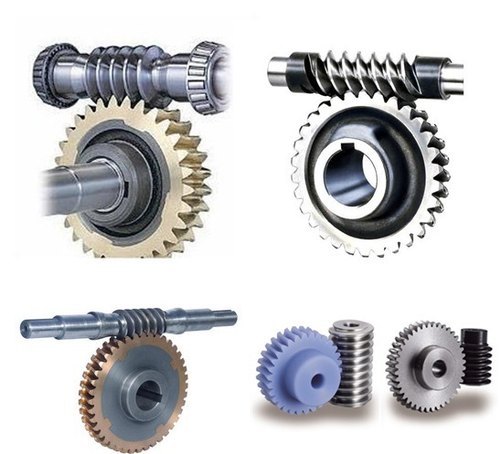
The worm gear creates sliding contact between the screw and the worm gear. The worm (or worm) of these gears is typically manufactured from hard materials, while the worm gear is made from soft materials to reduce friction. Screw and wheel gears are mainly used in inclined shafts and are placed at right angles, making them ideal for lifting applications.
Applications of worm gears
- Elevators and lifting machines
- Terrain vehicles
- Conveyor system
9. Internal gear
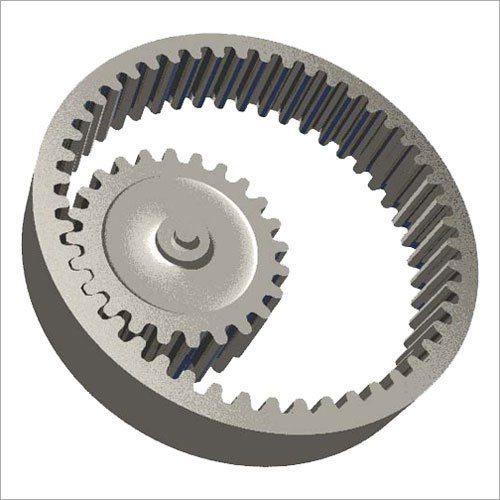
The teeth of the internal gear are located inside the gear cylinder, not on the outside. A helical gear or outer gears are placed inside the circumference of the internal gears and rotate around in a circular motion to create a planetary drive. Planetary transmissions are essential for most electric vehicles and are one of the oldest gear engineering designs. There are several applications for gears in creating planetary transmissions.
Applications of internal gears
- Tractor
- Constructive equipment
- Tram
- Automatic transmission
Each of these gear types is precision engineered for industrial, automotive and commercial applications. Although the design of each of these gears may seem complex, they exist commonly in machinery, equipment, and everyday items. Hopefully this article has helped you understand more about the classification and applications of gears in your machinery and how they operate in the equipment. Once you can determine the design and use of these gears, you will be better prepared to provide the most accurate and efficient repair of your equipment.
If you are looking for a gear processing machine supplier, please contact us immediately. VISC specializes in distributing outstanding gear processing machines for many applications. With more than 13 years of experience as an industrial processing solution consultant in combination with leading machine manufacturing experts in the world. VISC ensures we provide advice that effectively meets your unique needs.
-------------------------------------------------- ------------------------------
VIETNAM INDUSTRIAL SERVICES AND SOLUTIONS JOINT STOCK COMPANY
Office Address: B4-12 Vinhomes Gardenia, Ham Nghi, Cau Dien, Nam Tu Liem, Hanoi.
Tel: 0243-7525312 Email: Info@machines.com.vn
Website: www.viscgroup.vn



 Phone
Phone
+84-243-7525312
 Mail
Mail
info@machines.com.vn
 Office address
B4 - 12, Vinhomes Gardenia, Ham Nghi Street, Cau Dien Ward, Nam Tu Liem District, Hanoi
PRODUCT
Precision mechanical processing machine
Shearing and press brake machine


INFORMATION
REGISTER TO RECEIVE INFORMATION
Sign up to receive information from VISC