


Quality inspection robots
Inspection is critical to ensuring product quality, but the need for accurate and reliable testing often creates obstacles during the manufacturing process. Compared to manual methods, automated quality inspection robots are proven to increase speed and accuracy for manufacturers, and can deliver parts to inspection stations in unique and innovative ways. accuracy that cannot be achieved manually. Let's learn about the benefits and common applications of quality inspection robots through the article below.
What is a quality inspection robot?
Robots controlling production quality have become a trend in manufacturing factories today. In today's manufacturing industry, production quality control is a critical component, ensuring that manufactured products meet established standards. Integrating robots into quality inspection systems increases accuracy and efficiency, and also reduces labor costs.
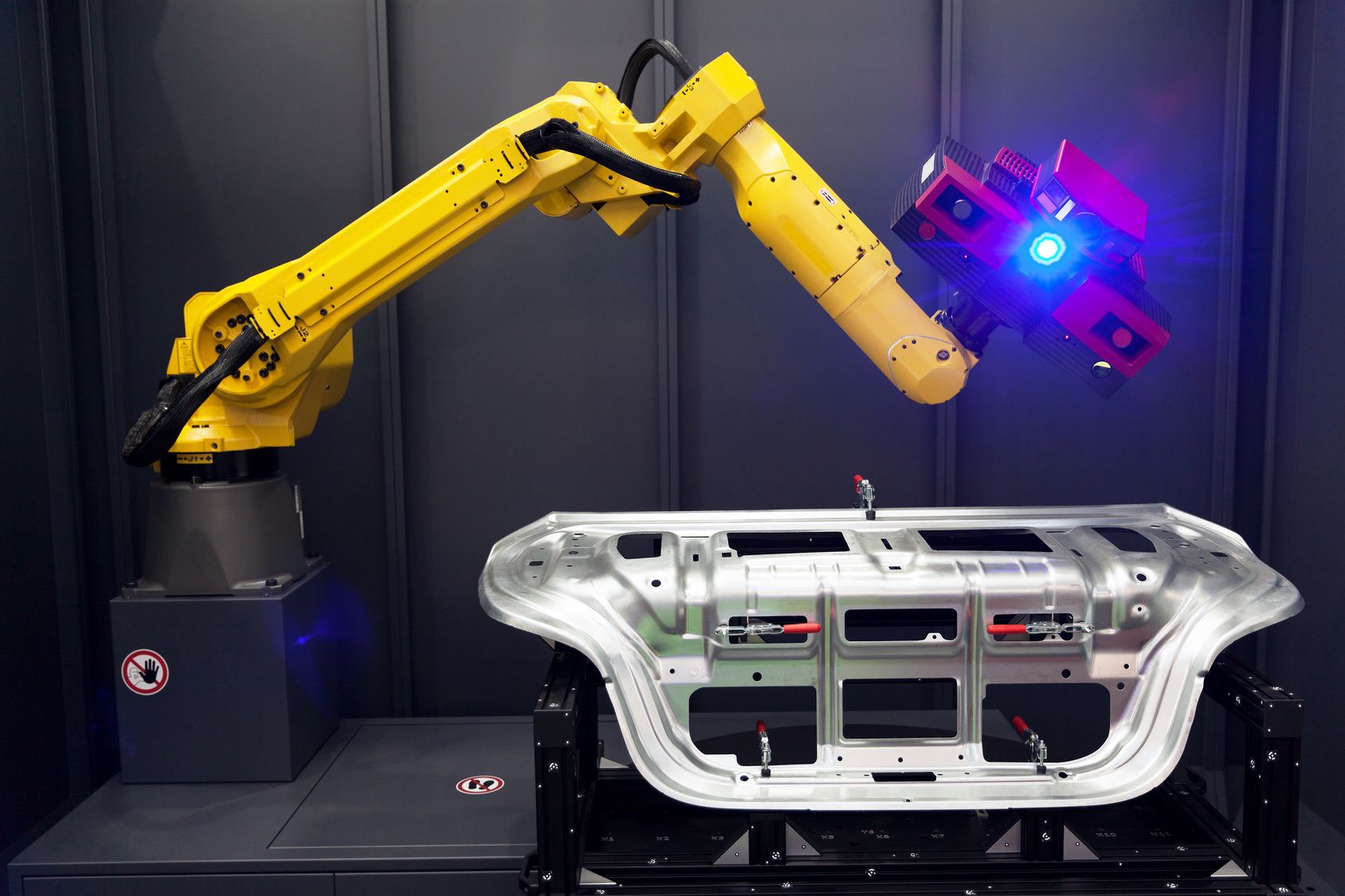
Some common applications of quality inspection robots
Check Size and Structure
Robots are used to inspect the size, shape, and texture of products, ensuring they meet quality standards.
Check Welding and Bonding:
In the automotive and manufacturing industries, robots can be used to check the quality of welds and other connections, and determine the uniformity and strength of the connection.
Surface and Finish Inspection:
Robots are used to scan and inspect product surfaces to ensure there are no defects, cracks, or stains. At the same time, check the finishing and painting.
Check Color and Gloss:
Robots can use vision systems to check product color and gloss, which is especially important in the cosmetics and household goods manufacturing industry.
Packaging Inspection and Evaluation:
In the food and packaging industry, robots can inspect packaging and evaluate packaging condition to ensure safety and quality.
Each manufacturing sector uses different types of robots in quality control, each designed to perform specific functions with high efficiency. Articulated robot, with flexible rotating joints. They are often used for tasks that require a lot of movement, such as picking up and placing parts up and down or reaching into tight spaces to perform inspections.
Benefits of using quality inspection robots
Improve quality control
There are some flaws that are too small for the human eye to detect, but with advanced vision, articulated robots can identify these flaws. Deploying a robotic inspection system ensures that any errors will be detected before the product reaches consumers. Robotic hand inspection systems provide better results than manual methods. All components can undergo an evaluation process, ensuring the quality and safety of each component.
Increase reliability
Manual testing processes can be error-prone and inconsistent. Humans do not have the ability to copy step by step. They may be tired or distracted, leading to missed component errors. Industrial robot arms excel at tasks that require high repetition. They are programmed with parameters and precise paths to follow. Because of the repeatability of industrial robot arms, robotic inspection systems are highly reliable. For industries such as the automotive industry, reliable testing methods are critical to ensuring end-user safety.
High speed
One of the biggest problems with manual inspection methods is that they can create a bottleneck in the overall production process. To ensure accurate inspection, humans may be slow to evaluate products, causing overall output to stagnate. Inspection robot operators have higher uptime than workers. They can work around the clock and at a much faster pace. They are programmed to switch from one section to another without interruption or delay, significantly increasing throughput and eliminating bottlenecks.
Flexibility
Another advantage of robotic inspection systems is the flexibility provided for inspection tasks. Inspection robots can quickly adapt to different types of products or materials. Many vision systems give robots the ability to dynamically sense product changes, preventing slowdowns or stops caused by part changes. Manufacturing robotic arms can also be reprogrammed and redeployed if the inspection process needs to be adjusted or changed completely. Inspection work cells can also be programmed to inspect a variety of parts. Robotic inspection systems are versatile and provide the flexibility needed for evolving manufacturing processes.
Add value
Robotic inspection systems not only add value to the processes themselves but also to the company's bottom line. Inspection robots can detect defects before they reach consumers and potentially become a major problem. They can also use their data to identify necessary adjustments in the manufacturing process to prevent the production of defective parts. This helps cut down on material waste, allowing companies to increase profits.
If you are looking for an automated quality robotic inspection solution for your business, let VISC accompany you. At VISC, we provide robotic equipment with a variety of technologies from reputable manufacturers such as Kuka, ABB, Panasonic, Moka,... along with installation, test running, operation training and maintenance services. Warranty brings satisfaction and trust to customers. Please contact us immediately to receive advice and the most preferential quote.
---------------------------------------------------------------------------------
VIETNAM INDUSTRIAL SERVICES AND SOLUTIONS JOINT STOCK COMPANY
Office Address: B4-12 Vinhomes Gardenia, Ham Nghi, Cau Dien, Nam Tu Liem, Hanoi.
Tel: 0243-7525312 Email: Info@machines.com.vn
Website: www.visgroup.vn



 Phone
Phone
+84-243-7525312
 Mail
Mail
info@machines.com.vn
 Office address
B4 - 12, Vinhomes Gardenia, Ham Nghi Street, Cau Dien Ward, Nam Tu Liem District, Hanoi
PRODUCT
Precision mechanical processing machine
Shearing and press brake machine


INFORMATION
REGISTER TO RECEIVE INFORMATION
Sign up to receive information from VISC